Food & Water Analysis
46 equipment available
Equipment for agri-food and water quality control: Pro-Nitro Kjeldahl distillers, Det-Gras N Soxhlet extractors, Flocumatic flocculators, Enobloc oenological analysers and bidistillers. AOAC, ISO 3696 and EEC 2676/90 methods with ENAC-traceable calibration.
4903007
AC-L4
4903008
AC-L8
4903004
Aquasel 4
4903006
Aquasel 6
4903015
D-10 Large
4903001
D-4 Large
4001729
Dest-4
4903000
L-3
4903002
L-4 Cabinet
4903016
L-8 Cabinet
4903005
R-4 Reser
4903017
R-8 Reser
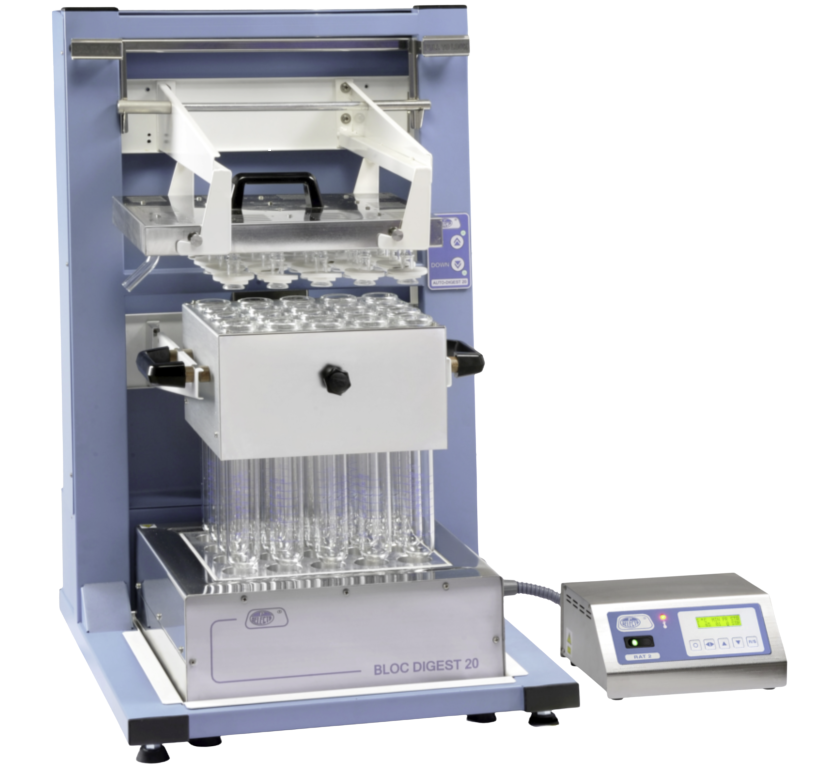
4003631
Auto-digest 20
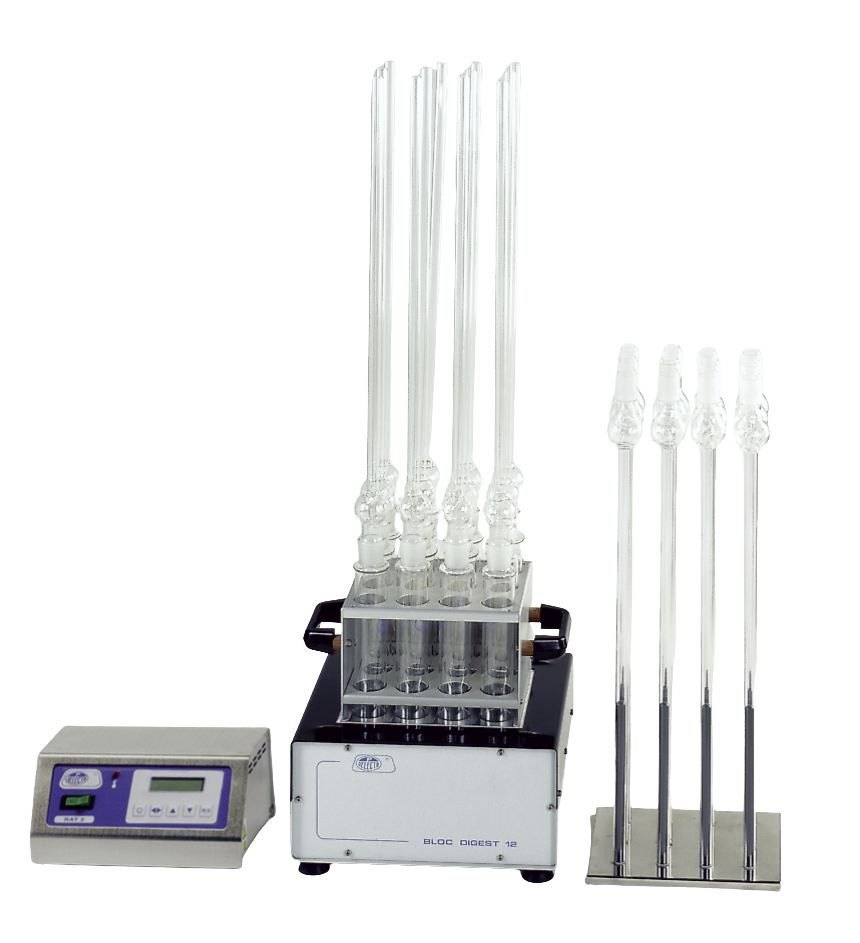
4000508
MACRO 12-seater metal heating block
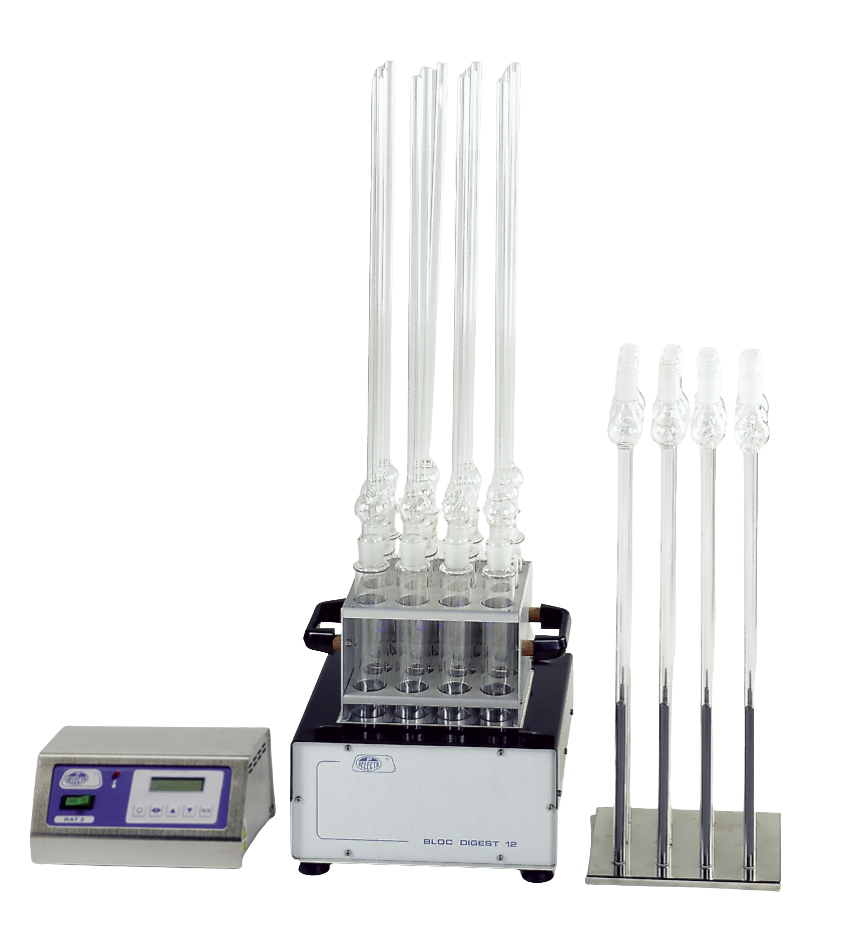
4000509
MACRO 20-seat metal heating block
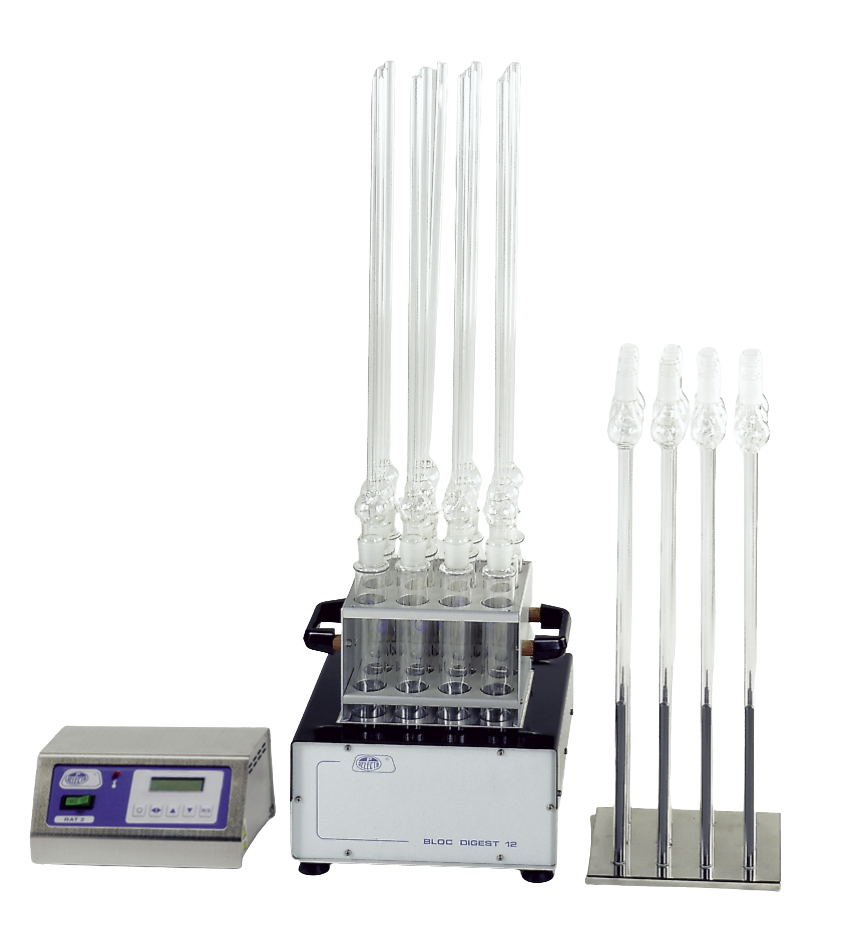
4000507
MACRO 6-seater metal heating block
.png)
4001050
MICRO 12-seater metal heating block
.png)
4001051
MICRO 24-seat metal heating block
.png)
4001052
MICRO 40-seat metal heating block
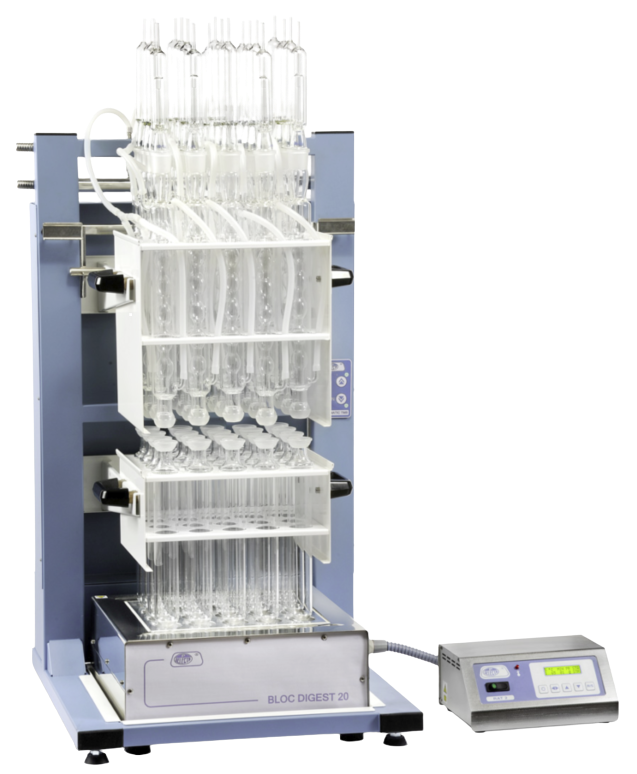
4002630
TMB-12
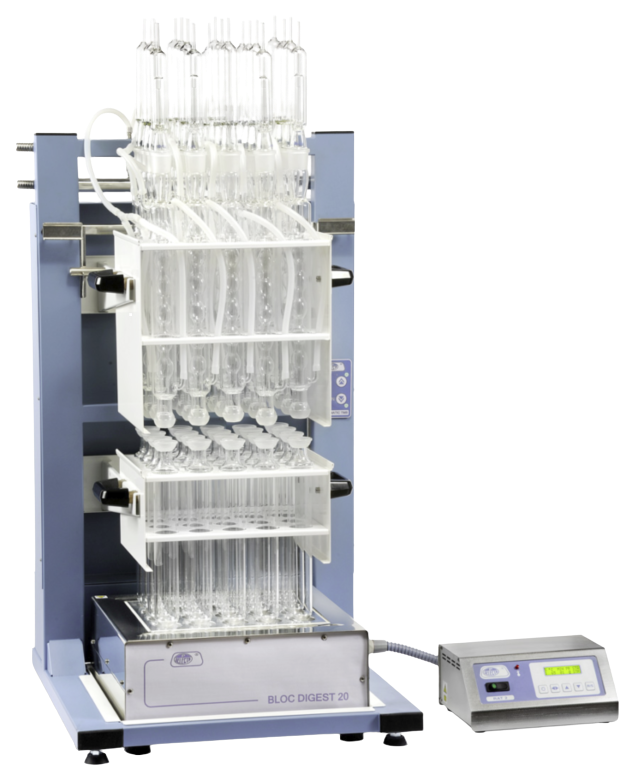
4002631
TMB-20
.png)
.png)
.png)
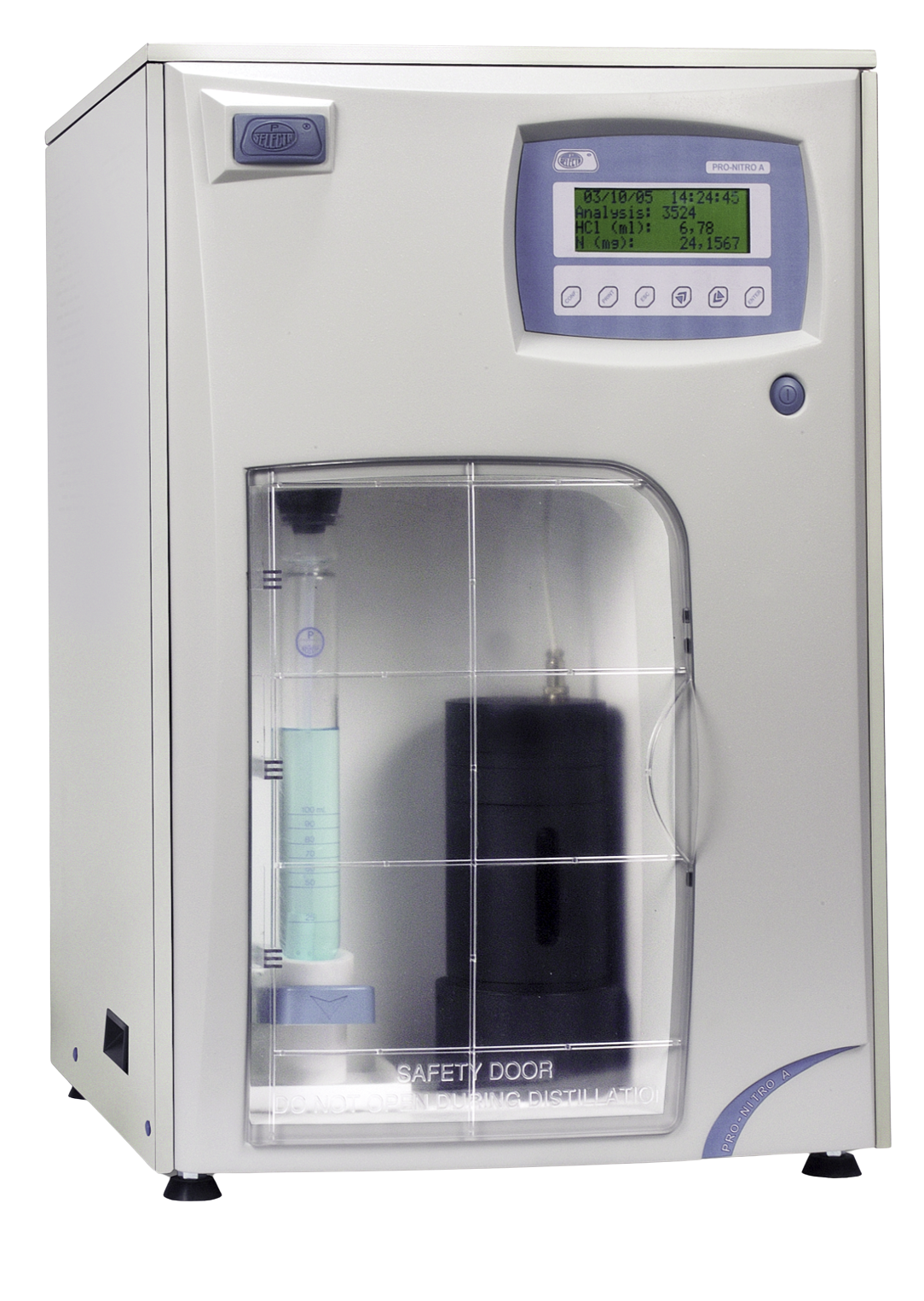
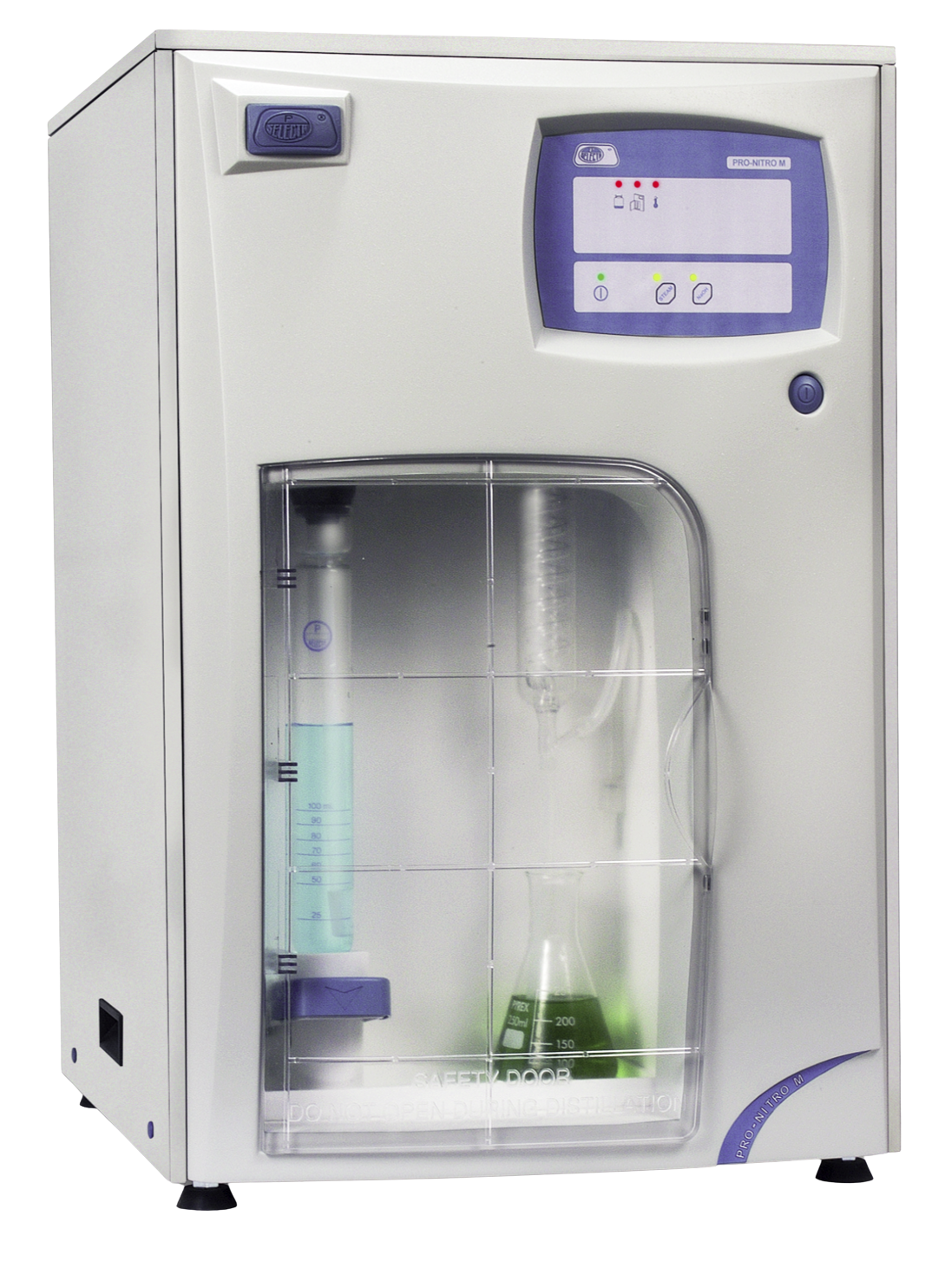
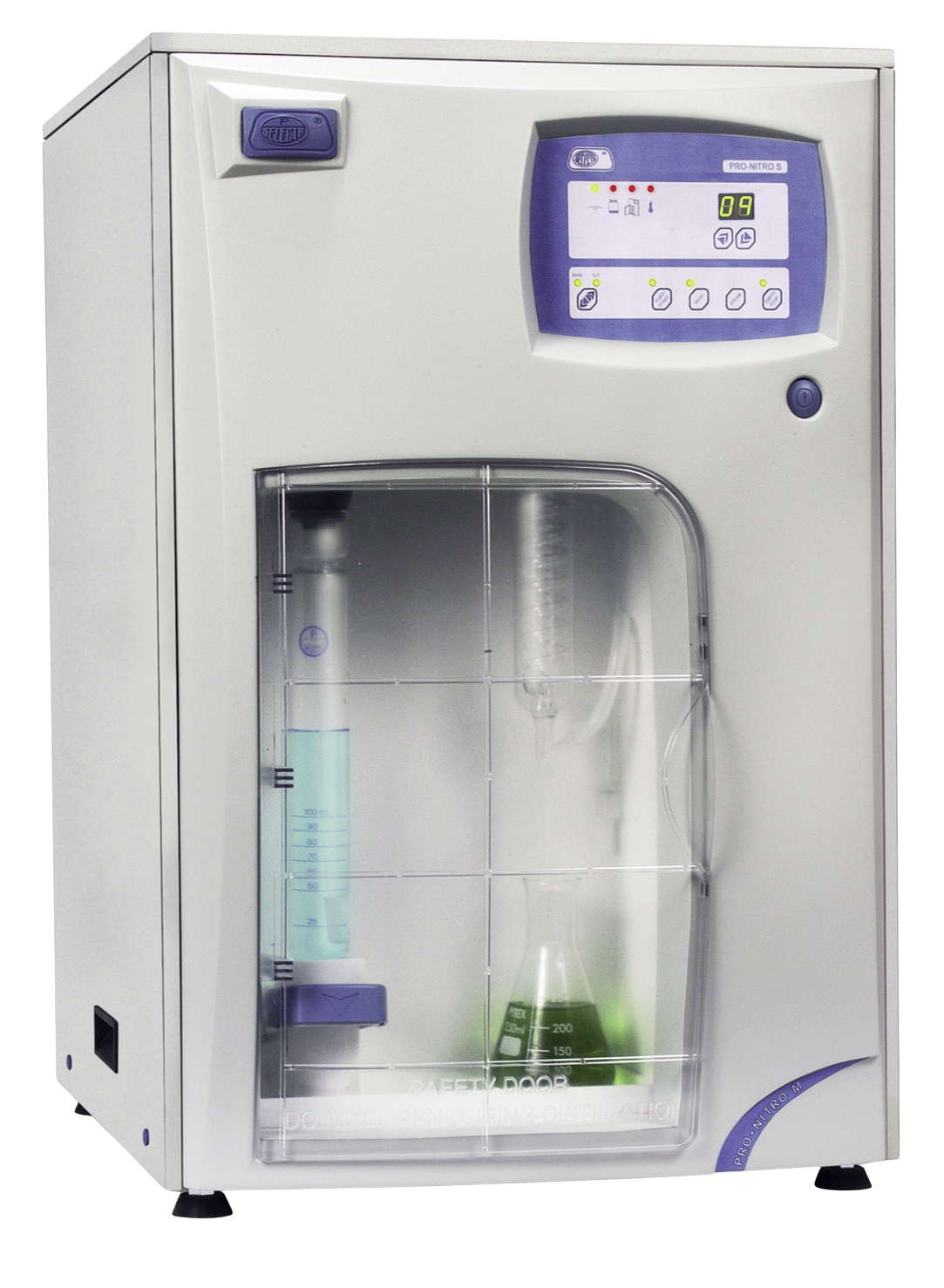
JP Selecta food and water analysis equipment
JP Selecta food and water analysis equipment covers the most frequent analytical determinations in quality control laboratories of the agri-food industry, water treatment plants and health inspection bodies.
The catalogue includes Kjeldahl distillers, Soxhlet extractors, fibre determination equipment, water distillers and bidistillers, flocculators and oenological analysers.
All equipment includes validation documentation and verification protocols compliant with current AOAC, ISO and food safety standards.
Our range of equipment for food and water analysis
Equipment specialised in everyday analytical determinations such as protein, fat, fibre, moisture and water.
Systems for protein and nitrogen determination
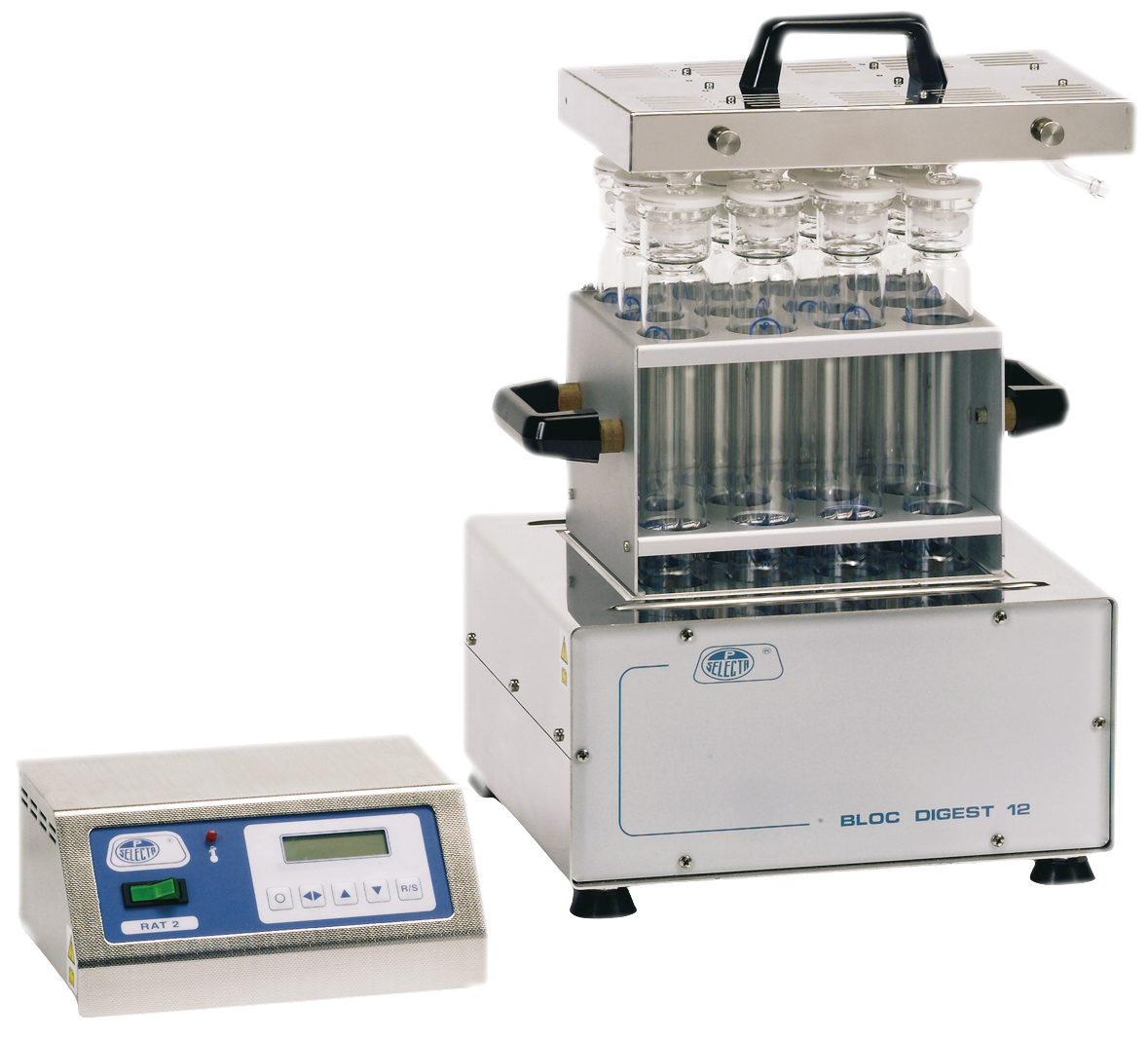
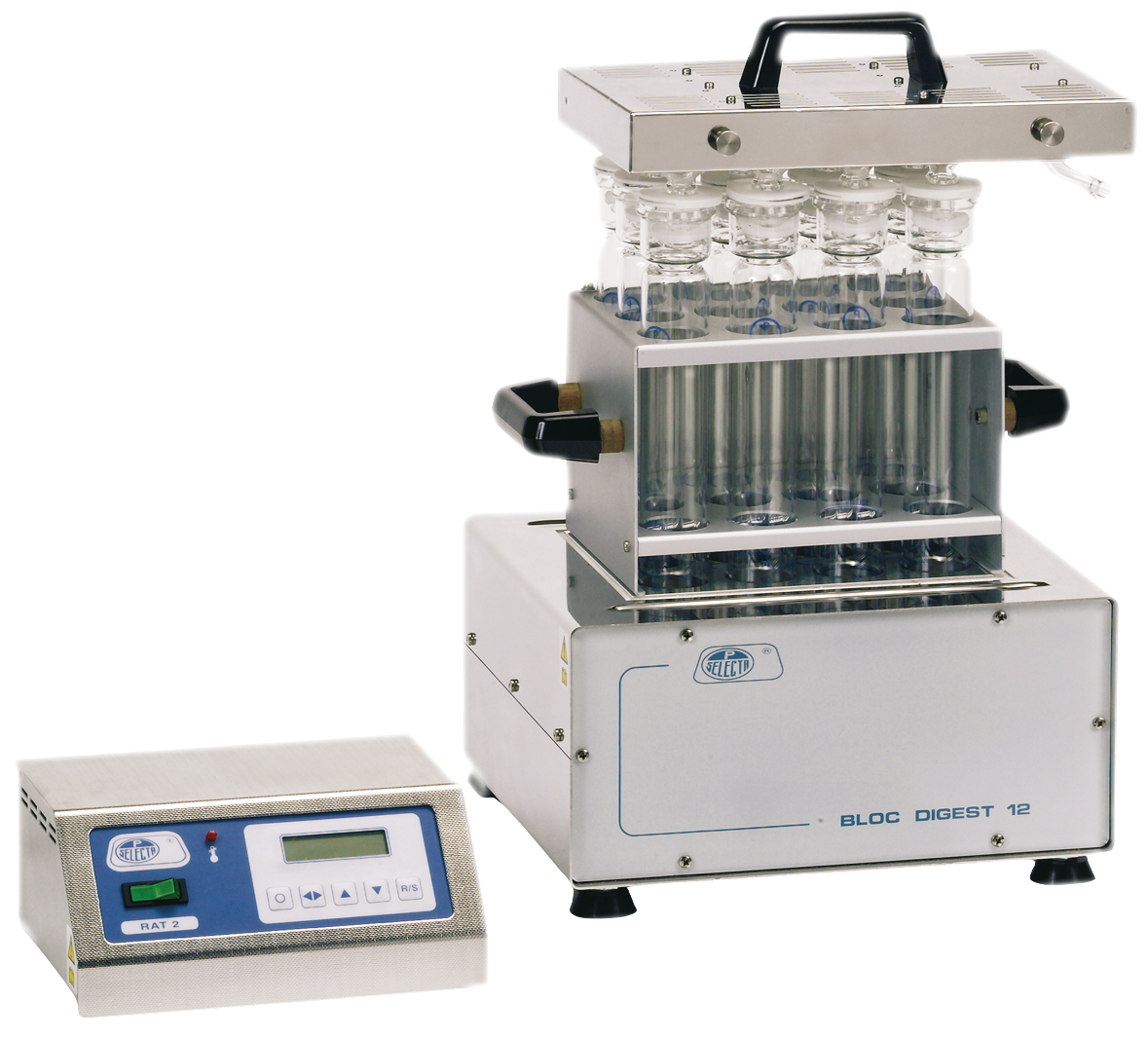
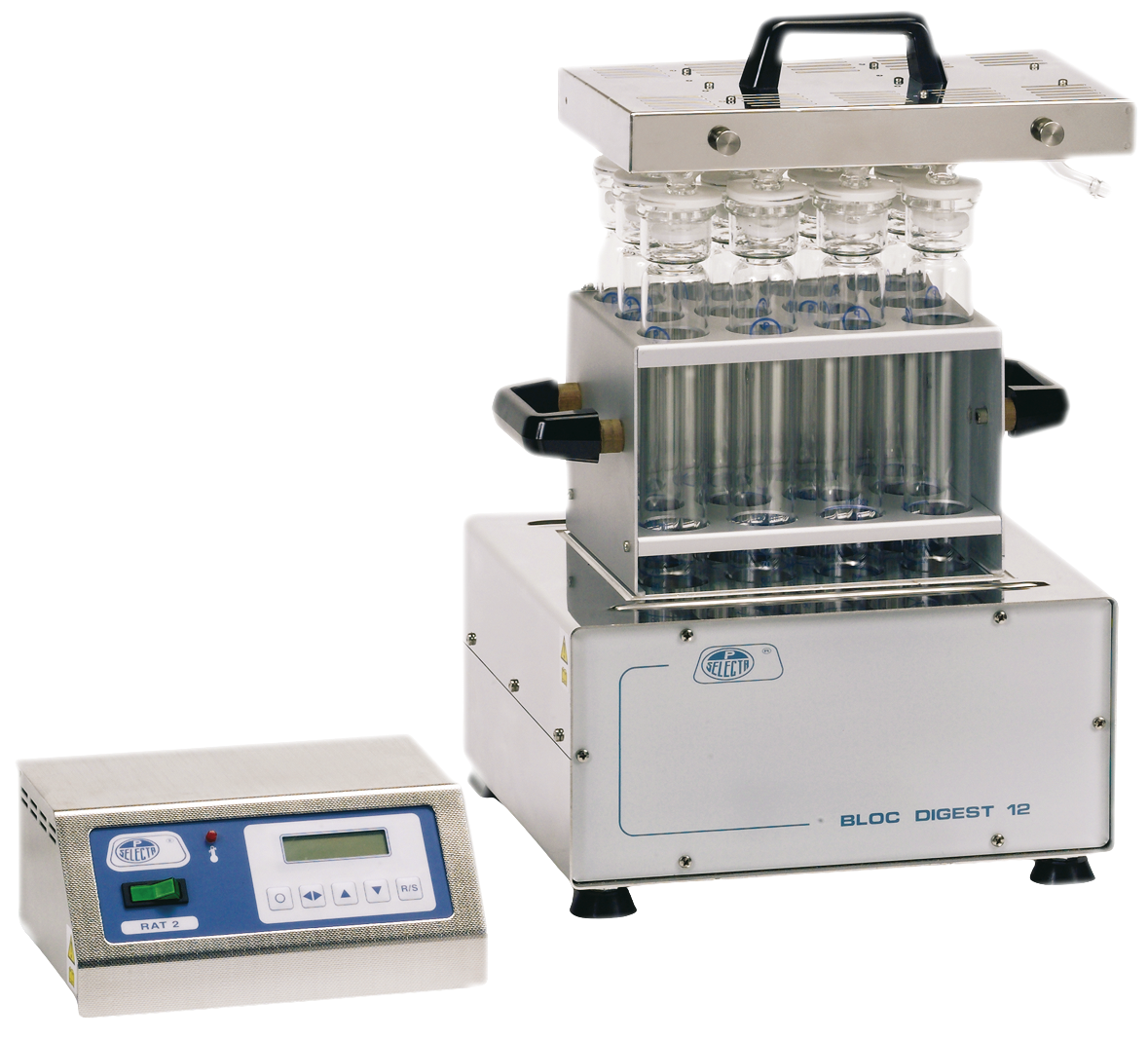
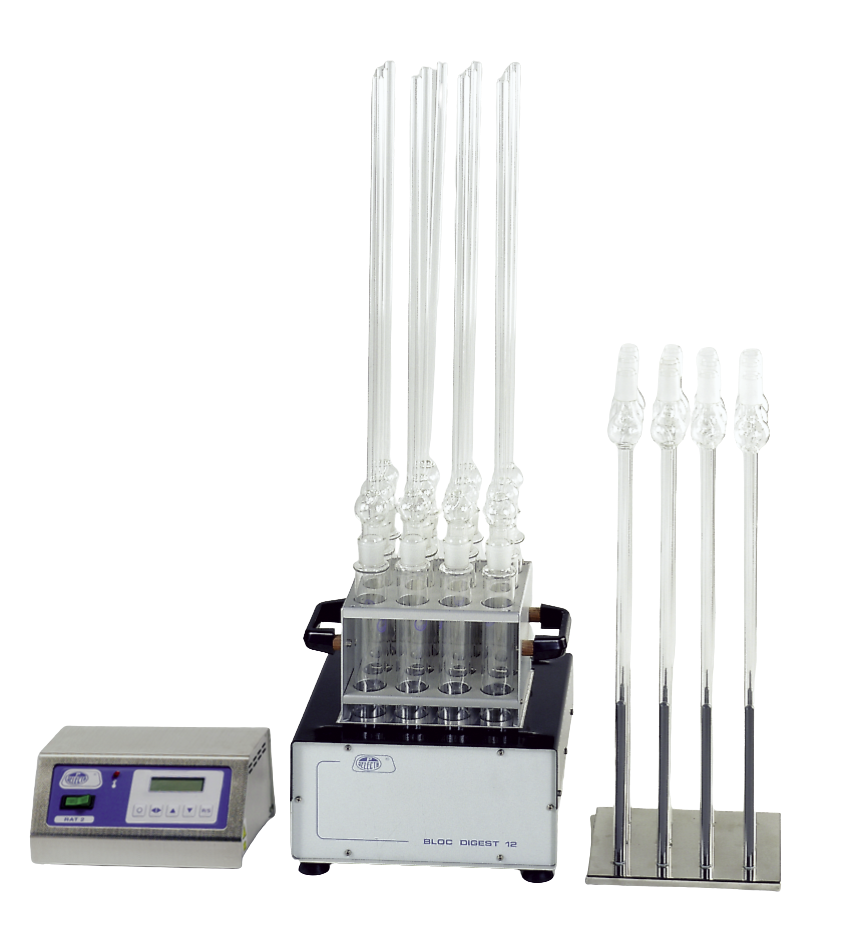
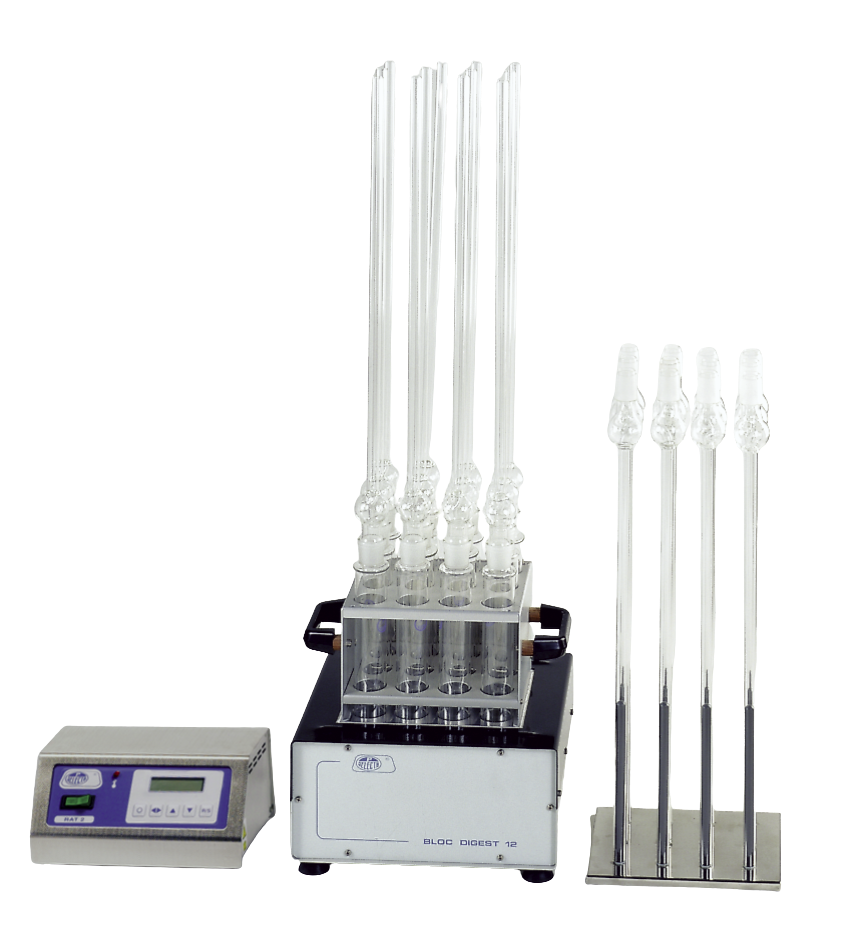
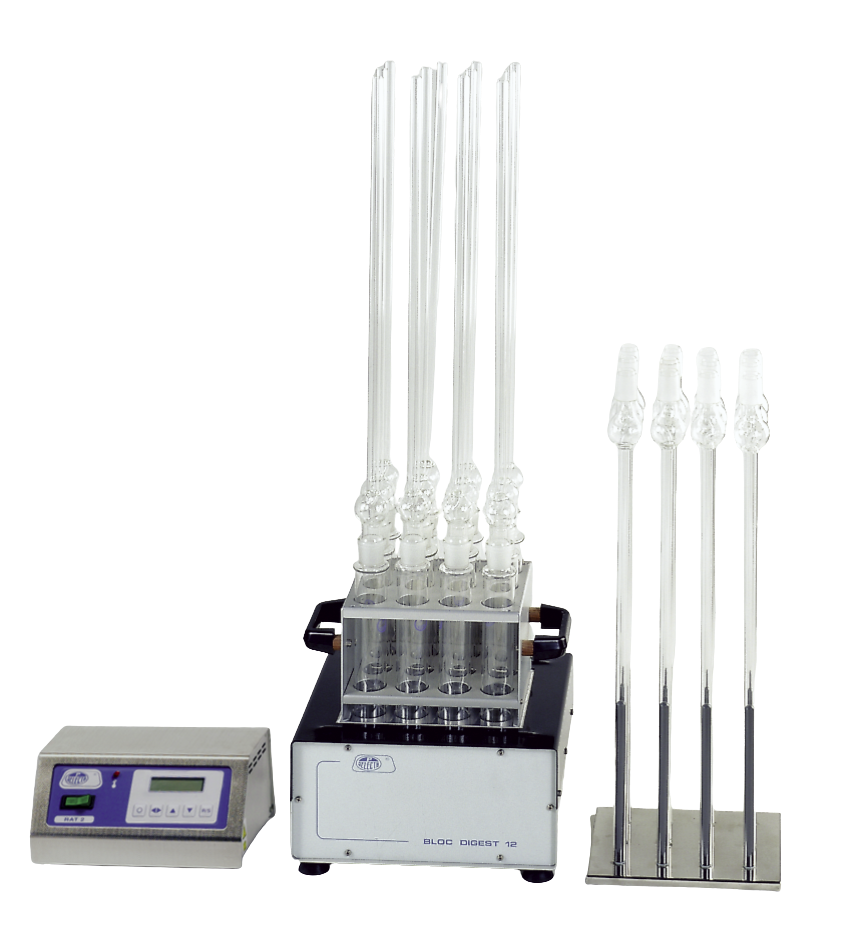
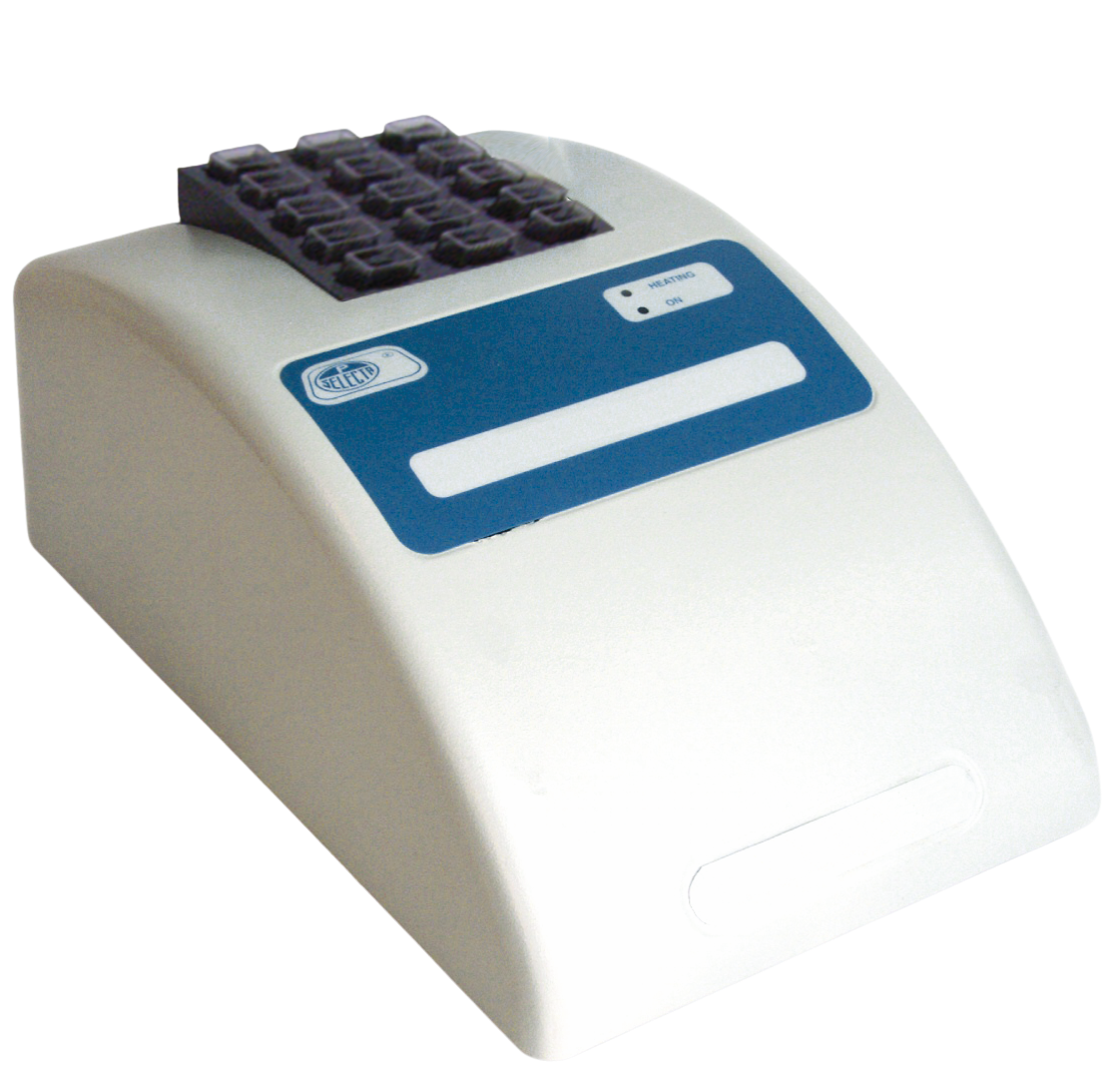
Systems for the determination of organic nitrogen by the Kjeldahl method are composed of two basic components developed to interact in a coordinated way: the digestion block (mineralisation) and the Pro-Nitro distillation unit.
- Available models: Bloc Digest (6, 12, 20, 24 and 40-place configurations), Auto-digest 20, Pro-Nitro M, Pro-Nitro S and Pro-Nitro A.
- Parameters they determine: They accurately quantify total nitrogen, organic nitrogen, crude protein, total casein and volatile nitrogenous bases.
- Main applications: Analytical quality control of food in cereals and derivatives, milk and dairy products, fruit juices, animal feed, raw materials and characterisation of wastewater.
Extraction of fats, oils and fibre
Efficient separation processes through systems designed to interact with solvents and common chemical reagents under conditions of maximum instrumental safety.
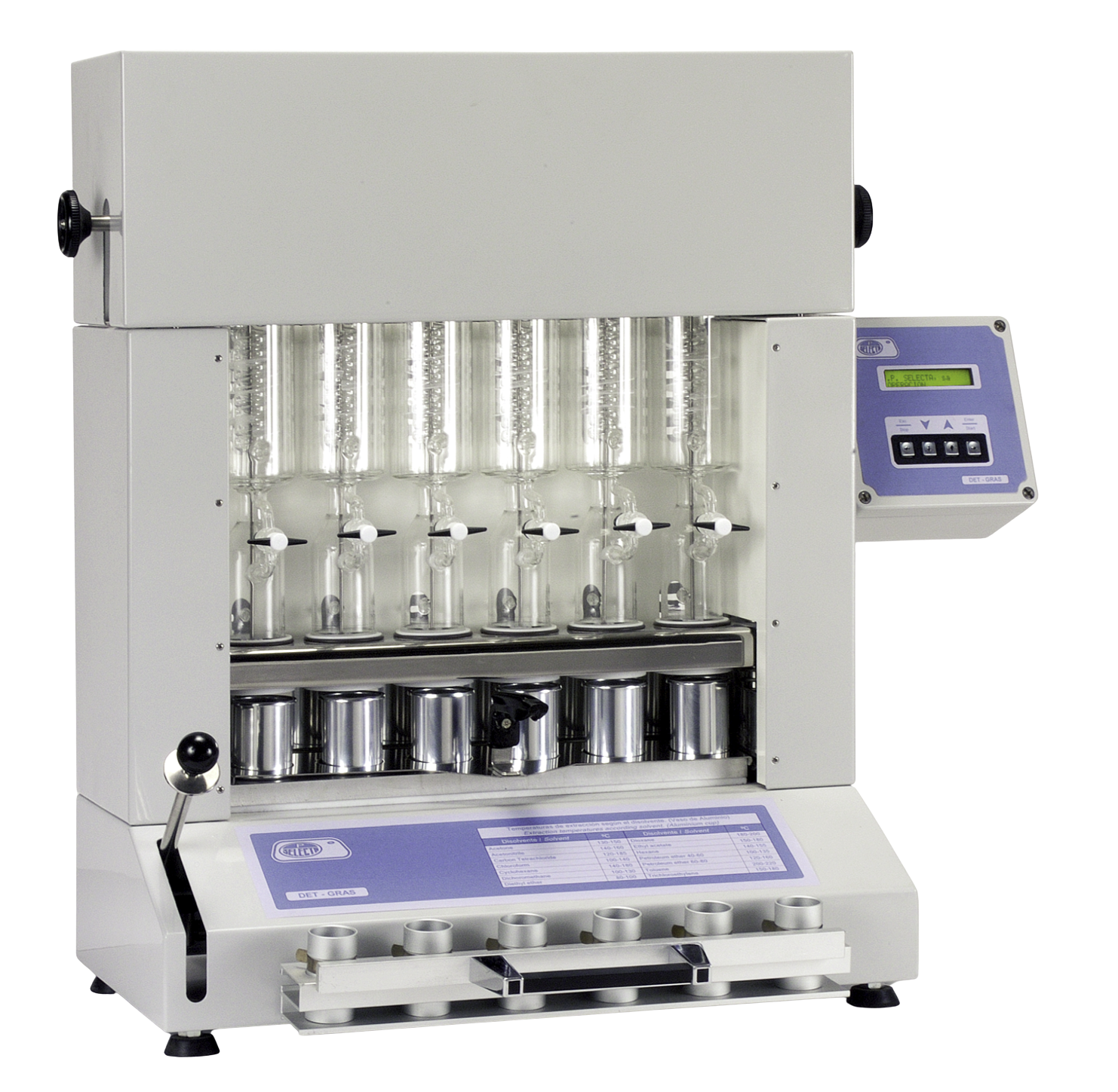
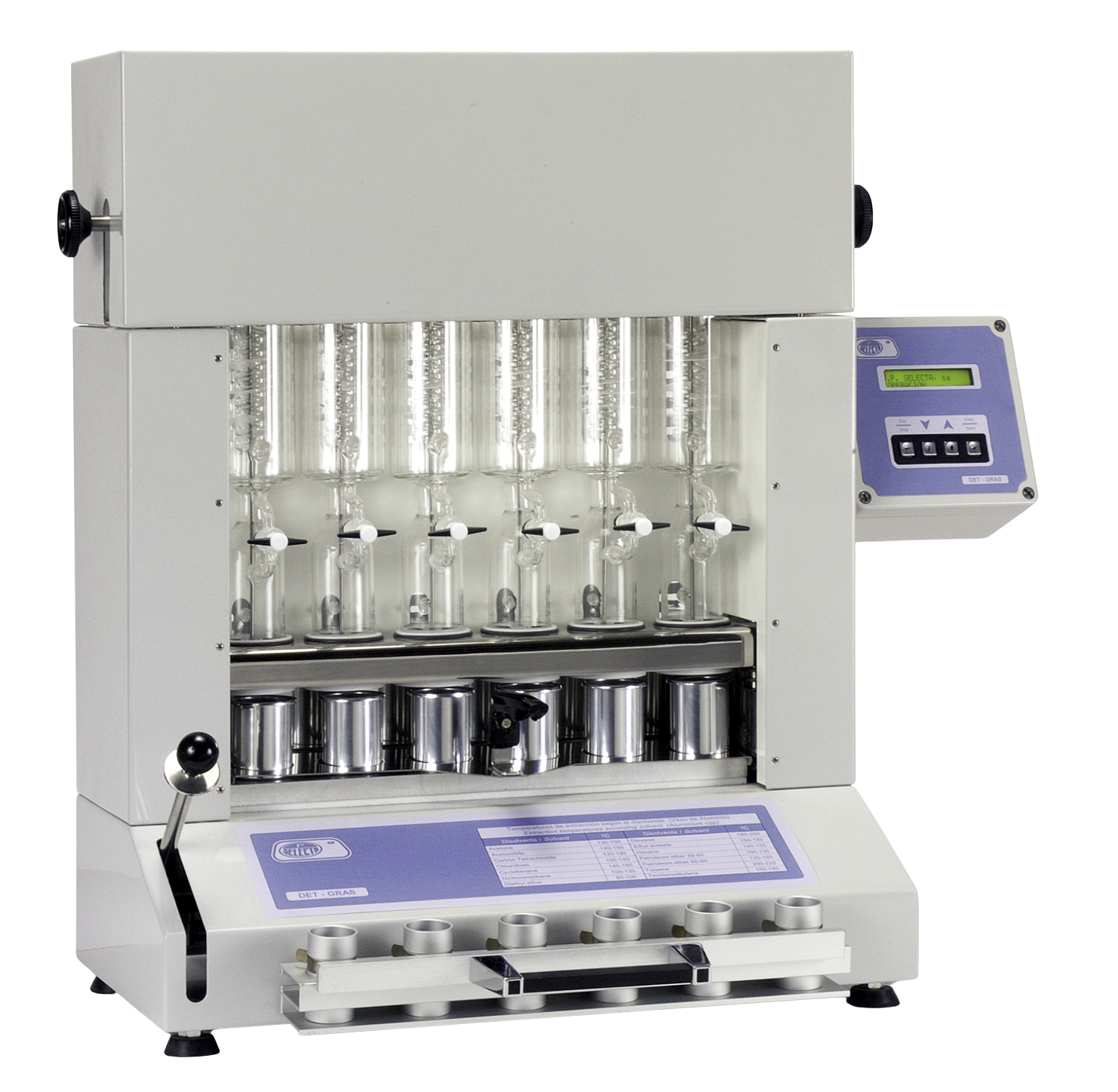
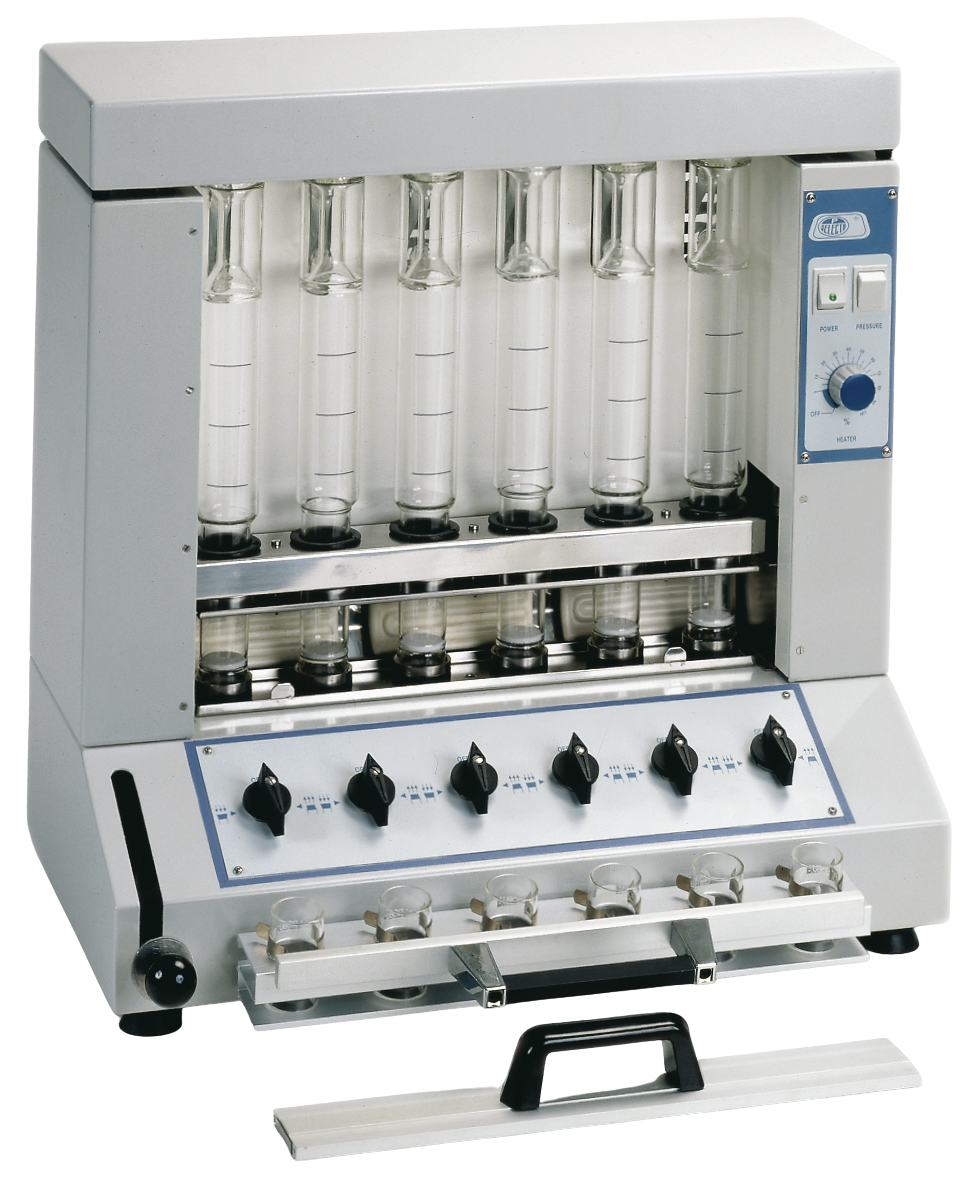
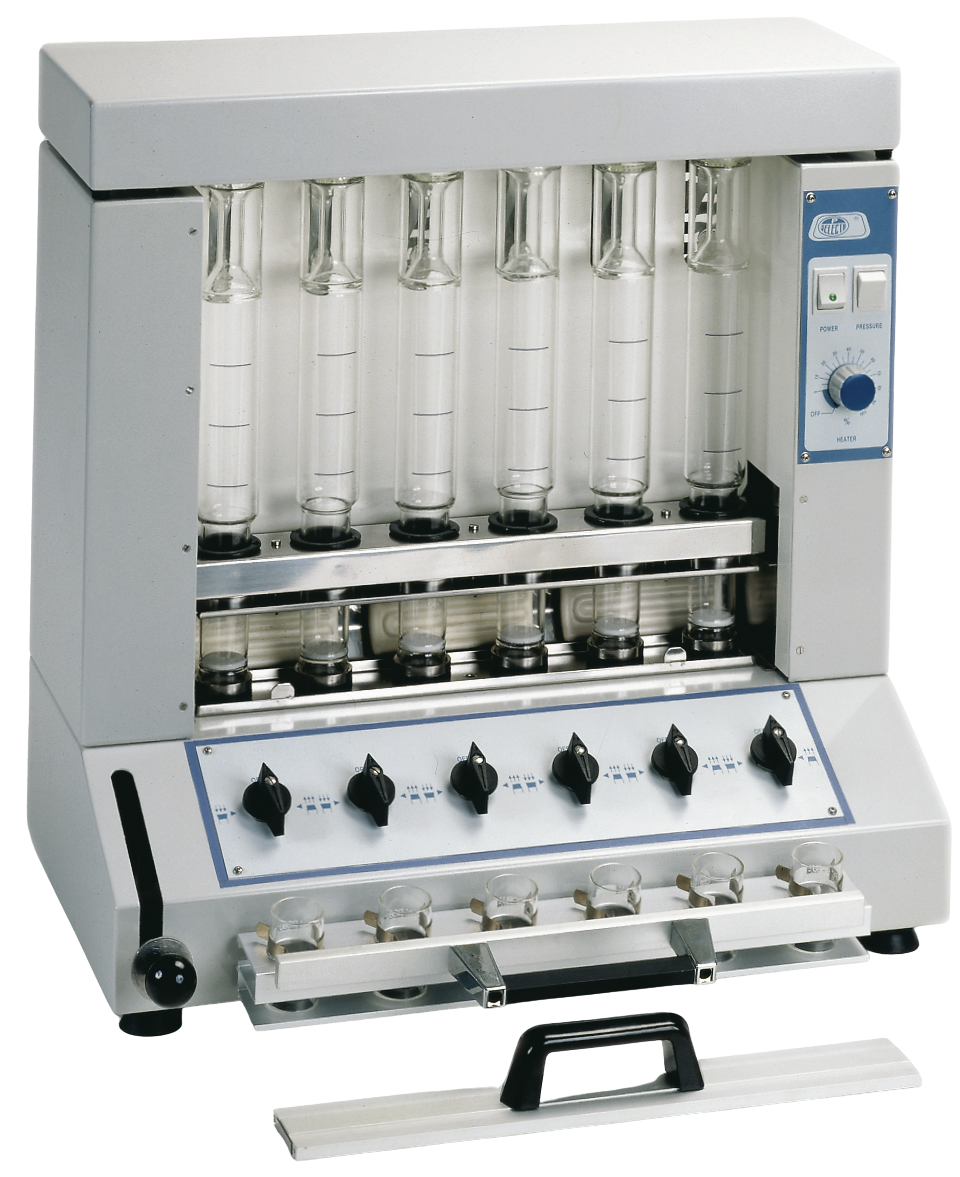
- Available models: Det-Gras N (2 and 6-place models), Dosi-Fiber (4 and 6-place models) and EF-1425.
- Parameters determined: Crude fat, soluble essential oils, crude cellulose, crude fibre, insoluble dietary fibre and total dietary fibre.
- Reference method/standard: Directly based on the reference methodologies of Soxhlet, Randall, Weende, Wijkström and Van Soest.
- Main applications: Determination of components in meat, fish, animal feed, prefabricated food, bakery products, paper pulp, wood and textile fibres.
Laboratory water analysis
Advanced instrumentation for purification, monitoring and assay oriented to optimising the technical performance of control stations.
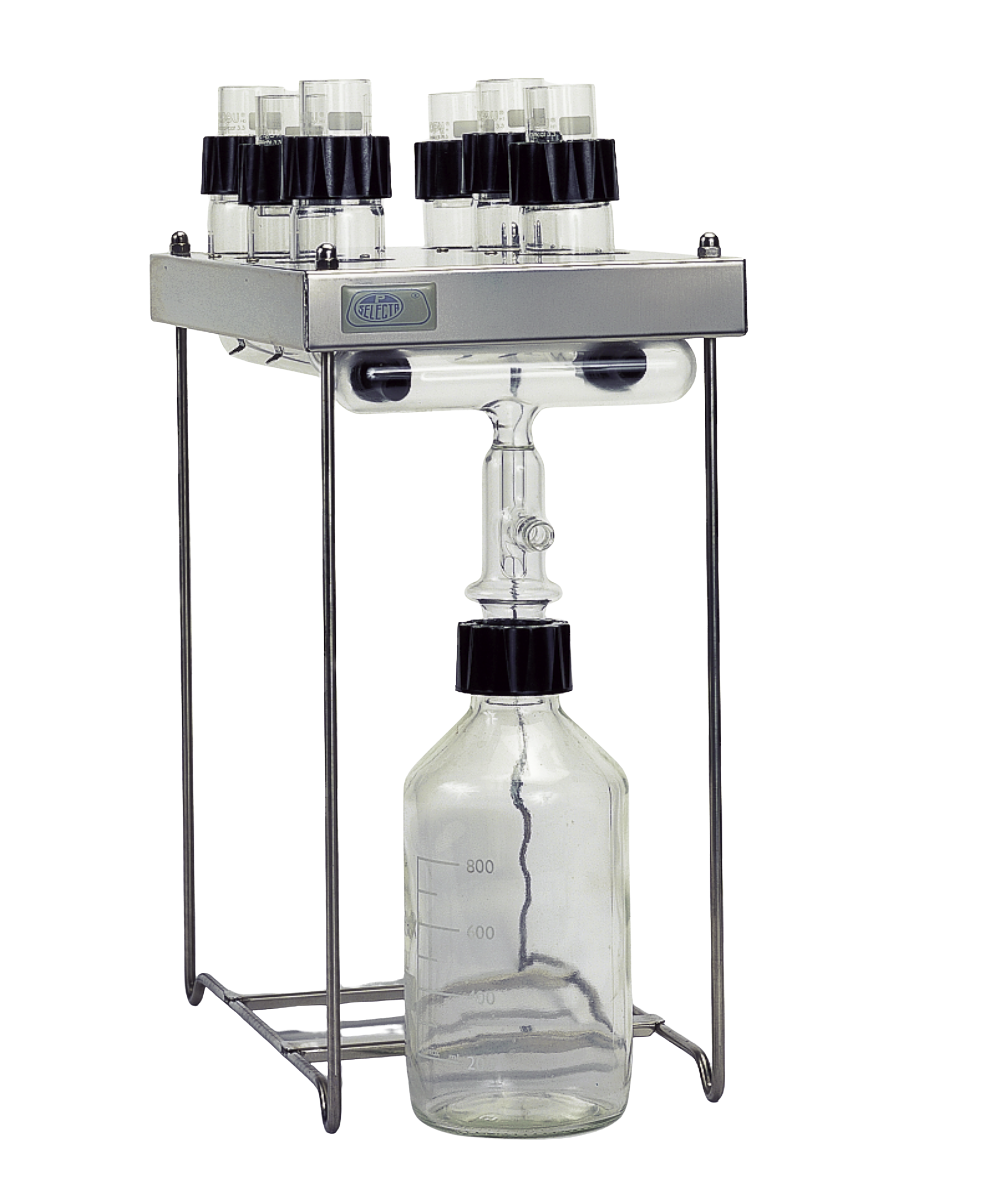
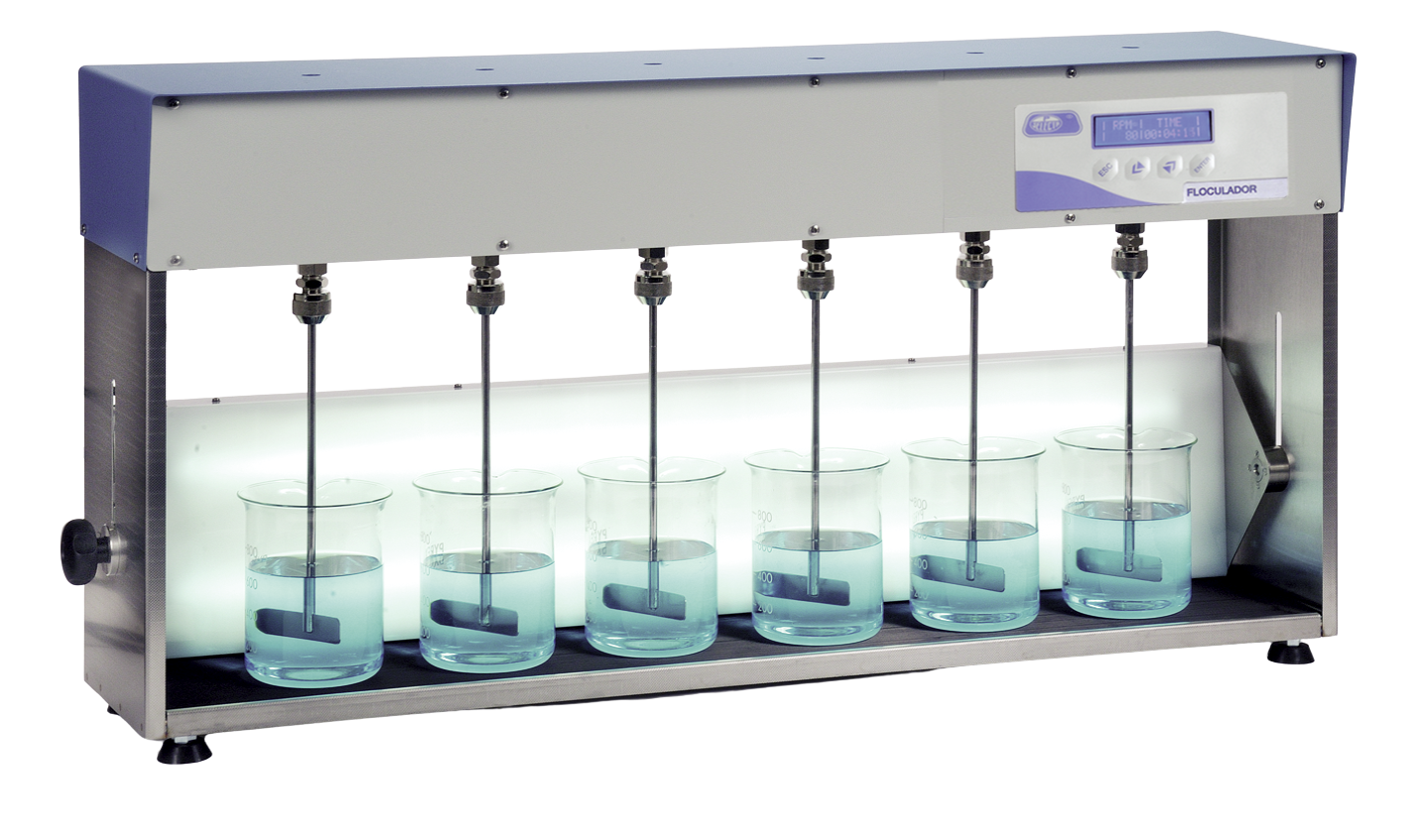
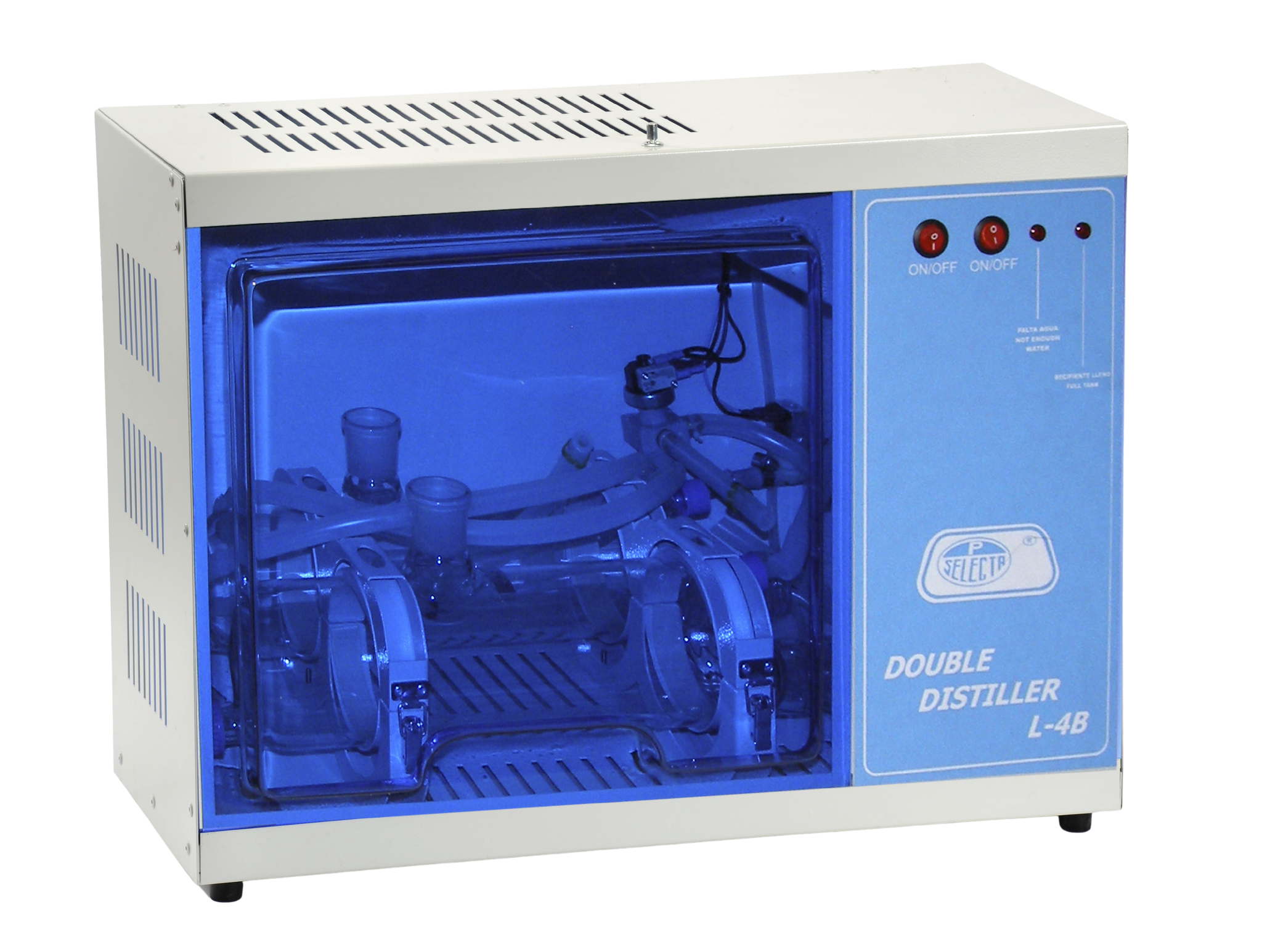
- Available models: Aquasel, L-3, D-4 and D-10 Large, AC-L4 and AC-L8, Cabinet and the Reser series, L-4B, Lab-Ion L-2 and LD-12, Smeg WP3010, AC-3 and Flocumatic.
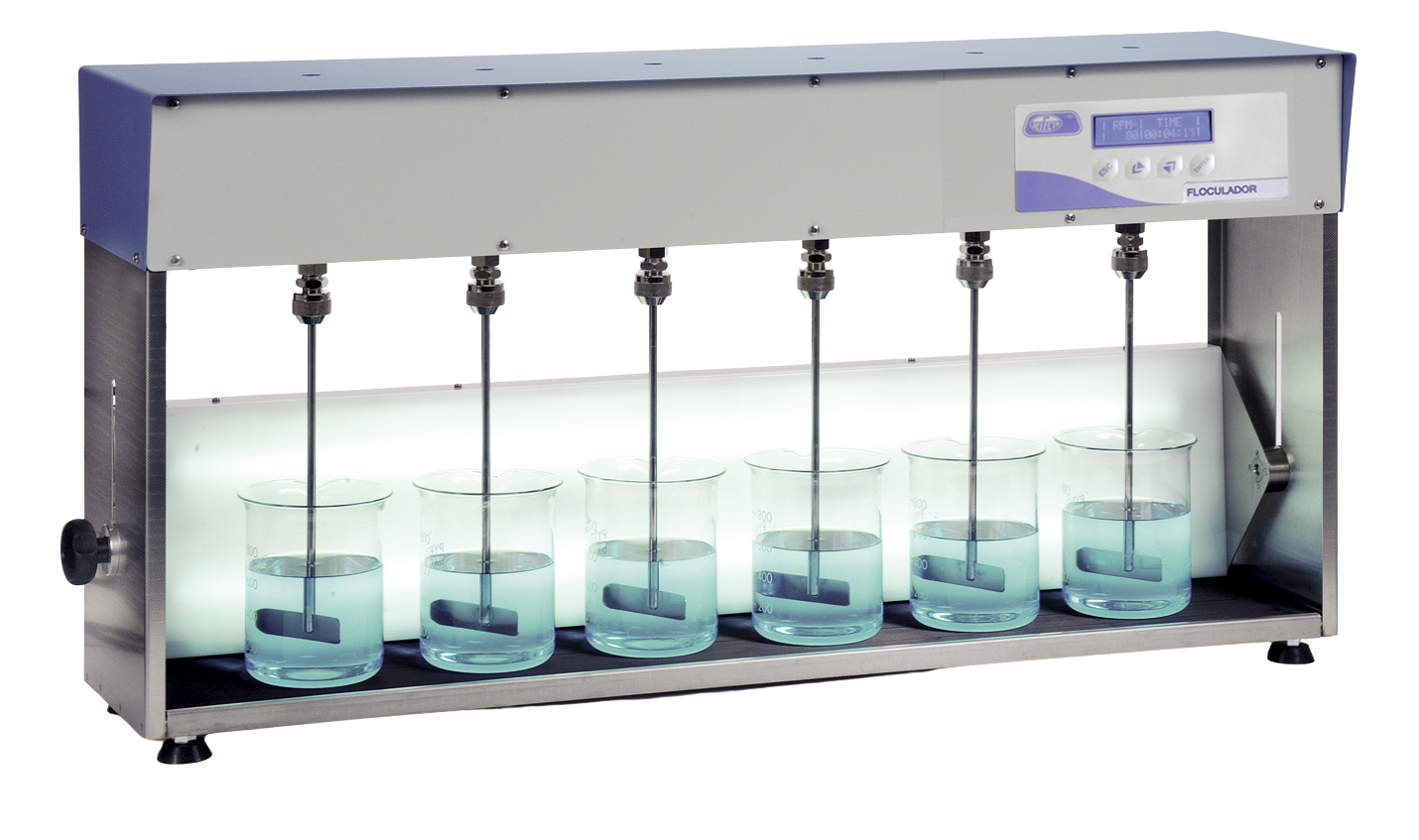
- Parameters determined: Evaluation of flocculating agents for sedimentation, and continuous supply of high-resistivity purified water free of ions or pyrogens.
- Reference method/standard: Compliant with the official guidelines of the European Pharmacopoeia and the international standard ISO-3696 for obtaining laboratory Grade III water.
- Main applications: Jar Test assays and optimisation of coagulant or polyelectrolyte dosing in surface and wastewater treatment plants.
Complementary equipment and specific analysis
To cover critical determinations with integrated solutions based on advanced analytical logic.
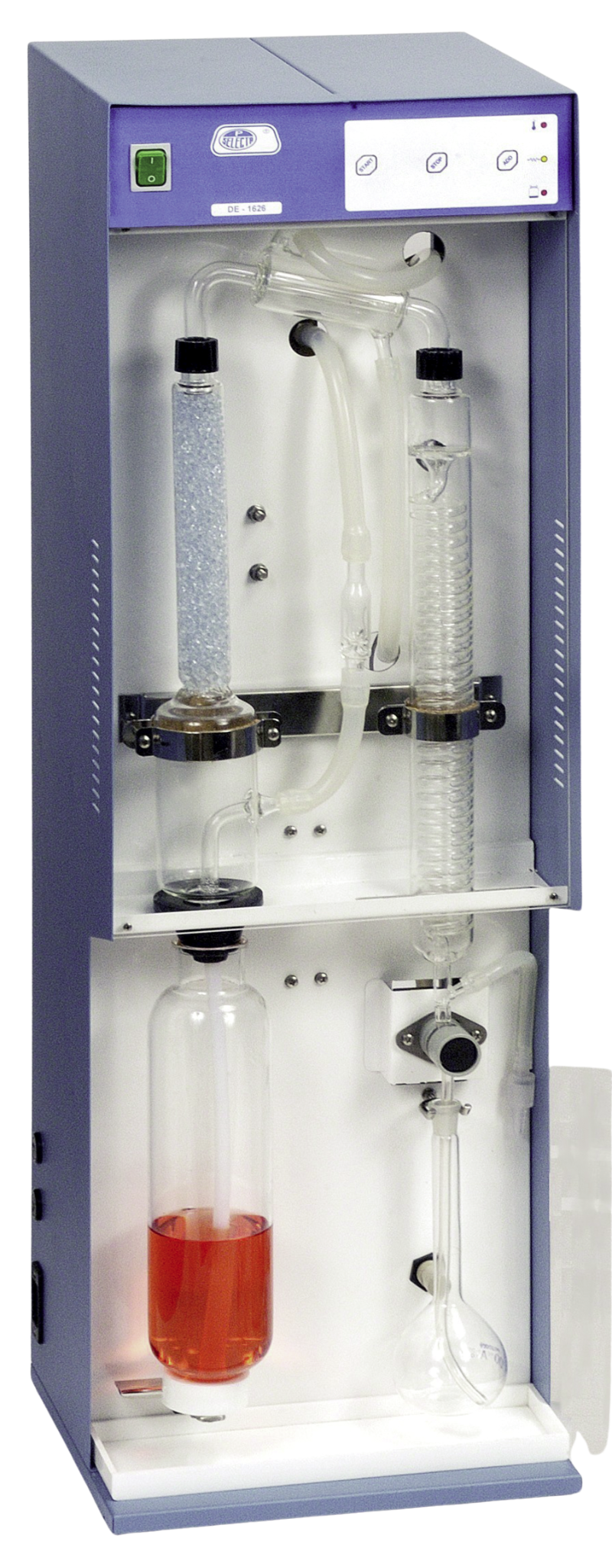
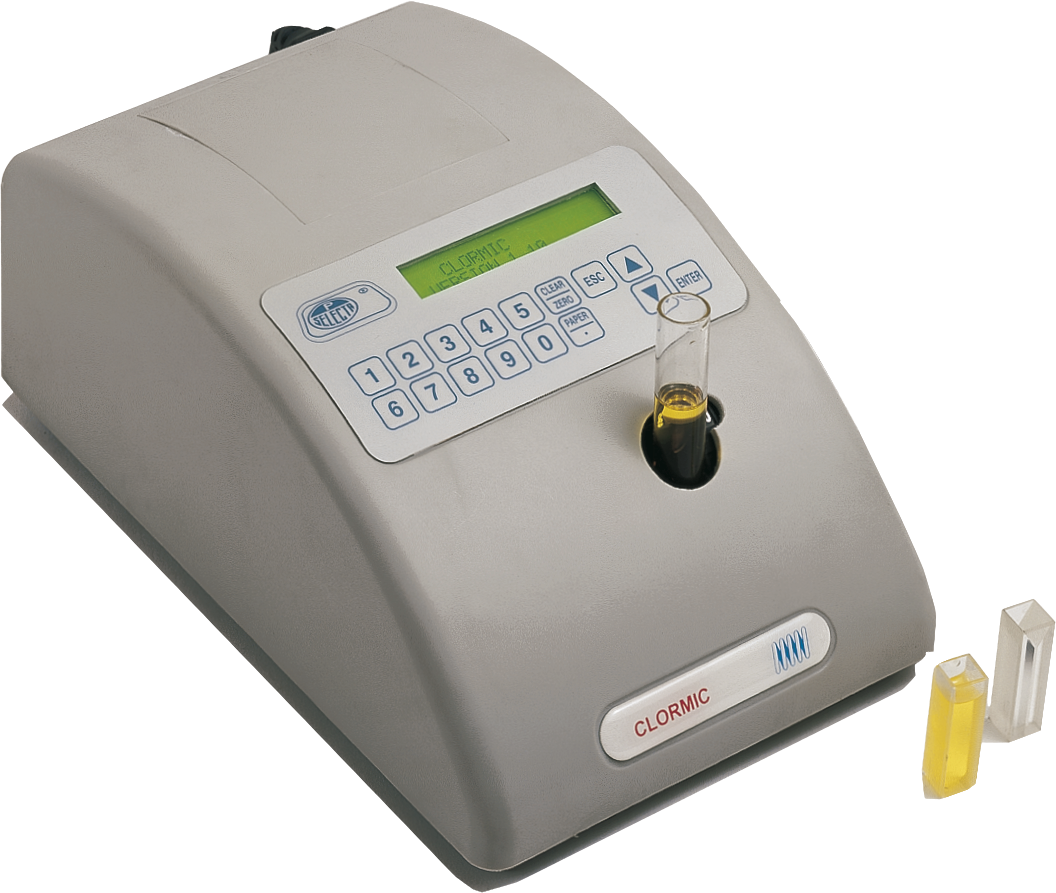
- Available models: DE-1626, M-3000, Cencom III, Enobloc, Eco-8 and Eco-16, DBO Sensor 6 and 10, and Medilow S, L and LG.
- Parameters determined: Volumetric alcoholic strength, volatile acidity, sorbic acid, total polyphenols (Folin index), phenolic maturity, enzymatic analyses in musts, Chemical Oxygen Demand (COD) and Biological Oxygen Demand (BOD).
- Reference method/standard: EEC No. 2676/90 and EEC No. 2870/2000, UNE 77-004 and DIN 38414.
- Main applications: Systematic quality control in wineries and the wine-making sector, as well as environmental analytical characterisation of wastewater and depuration sludges.
Methodologies and standards applied to food and water analysis
JP Selecta meticulously designs each component of its equipment to align with the strictest international standards, ensuring the methodological reproducibility demanded by global regulatory bodies.
Official AOAC and ISO methods
They are the fundamental reference axes in industrial quality control and health inspections.
Traceability and documentation for audits
JP Selecta equipment is delivered accompanied by their respective factory-individualised verification and calibration protocols. We also provide a complementary calibration service directly traceable to ENAC for accredited environments.
Repeatability and analytical precision
Repeatability higher than 0.05 %, achieving perfectly traceable correlation against the laboratory oven method. This precision extends equally to the repeatability of Det-Gras N Soxhlet extractors and the protein distillers of the Pro-Nitro series.
Why choose JP Selecta food and water analysis equipment
Choosing JP Selecta means integrating decades of experience and European reliability into the daily instrumentation of your laboratory.
Comprehensive single-supplier solution
We have more than 75 years of specialisation in the manufacture of scientific equipment, performing a 100 % verification of each unit produced before its dispatch.
Local technical assistance
We ensure fast and highly specialised local technical assistance. This guarantees rigorous preventive maintenance, reliable calibrations and immediate original spare parts to protect the continuity of your analytical workflows.
Permanent stock and wide range
We have permanent stock and an extensive variety of commercial references to respond agilely to any requirement of sample volume or methodological complexity in control laboratories.
Request a custom quote
Our technical-commercial team will help you select the most suitable equipment according to the parameters you need to determine, the standards you must meet and your daily sample volume.
Frequently Asked Questions
What is the difference between a semi-automatic and an automatic Kjeldahl distiller?
The semi-automatic Pro-Nitro S distiller requires the user to configure, through its LED display, the automatic dosing of boric acid and NaOH, the exact distillation time and the final emptying of the sample tube. By contrast, the automatic Pro-Nitro A model is completely autonomous as it incorporates an inline colorimetric titrator that processes the sample in real time and stops distillation at the precise moment when the sample stops releasing nitrogen.
Can this equipment be validated for an ISO 17025-accredited laboratory?
Yes, completely. JP Selecta's analytical range incorporates integrated analytical logic specifically designed to operate without stopping the operational cycle in environments regulated by ISO 17025 and HACCP systems.
Does the equipment include validation documentation and verification protocols?
Yes. All Kjeldahl series distillers are mandatorily subjected to a rigorous nitrogen-recovery test protocol at the end of their manufacturing process. The detailed quality-control report is physically delivered with the equipment and is fully valid for direct integration into the IQ and OQ quality qualifications of the laboratory.
What maintenance do Kjeldahl distillers require?
They require a regular preventive routine focused on systematic cleaning of the fume trap or collector, periodic replacement of the sealing gaskets exposed to chemical reagents, and technical verification of the constancy of the distillation temperature.
What are the differences between Pro-Nitro S, Pro-Nitro M, and Pro-Nitro A?
The Pro-Nitro M is a steam-distillation unit with automatic NaOH dosing and timed stop, ideal for educational centres and laboratories with low-to-medium sample volume. The Pro-Nitro S adds advanced automation with automatic boric acid addition, pneumatic system for automatic sample-tube emptying after the cycle, and LED parameter-programming display oriented to medium or large volumes. The Pro-Nitro A represents maximum automation, incorporating an inline colorimetric titrator in real time (which drastically reduces analysis time), a large LCD display and RS-232 serial connectivity to issue printed reports valid for GLP regulations.